"Please Send Fabric Details": What Belongs in a Pillow Cover Specification
Buyers increasingly ask for cover photos and fabric details alongside the pillow spec. The composition, GSM, zipper and wash-rating details that answer the question properly.
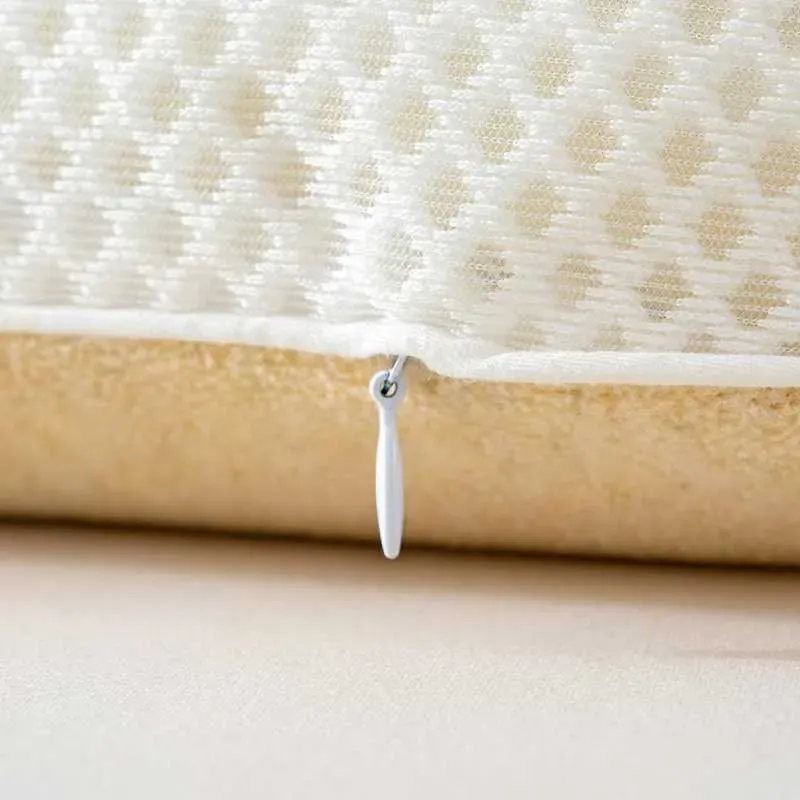
A hotel inquiry recently asked for two things most pillow quotations skip: cover photos and fabric details. The pillow specification was three lines long; the cover request was a paragraph. That imbalance is not the buyer being fussy — it reflects where cover problems actually occur. Foam rarely causes a hotel complaint; a cover that pills after twenty washes, splits at the zipper or stops feeling cool does.
What "fabric details" should contain
A complete cover specification fits on half a page and answers every question a laundry or a purchasing manager will ask. Fabric composition with percentages — for example 75% nylon, 25% spandex weft knit, or a Tencel-blend woven — because "cooling fabric" and "Tencel" are categories, not specs. Fabric weight in GSM, typically 220 to 280 for a knitted pillow cover; anything lighter wears through at the zipper line. Zipper specification: size, brand if branded, and whether the pull is hidden. Wash rating: how many cycles at what temperature the cover survives, tested, not assumed — forty to sixty domestic cycles at 40 degrees is a defensible claim for a quality knit, and industrial hotel laundering needs its own statement. Pilling grade if the mill provides one.
If the fabric is a cooling knit, the honest technical marker is a Q-max value — the surface cold-touch measurement some mills test — rather than the word "cooling" alone. Tencel is a brand name for lyocell fibre and should be stated as a fibre content, not a marketing adjective. A buyer who knows textiles reads imprecision here as a supplier who has never had a cover problem investigated.
The photos that answer questions
Four photographs answer most cover questions before they are asked: the cover fitted on the pillow from the sleeping side, the underside showing the zipper line, a close-up of the zipper and pull, and the fabric edge or inside-out shot showing the knit or weave. Studio-lit and in focus. Buyers ask for photos because cover defects are visual; supplying them unprompted moves the conversation from "prove it" to "when can you ship".
The washability clause worth writing down
"Removable, zippered and washable" appears in almost every hotel cover request, and the part that gets suppliers into trouble is washable. A cover that survives twenty domestic washes can still fail a hotel's industrial laundry after a season. State the tested cycle count and conditions — for example "tested to 50 wash cycles at 40 degrees C, line dry" — and if the buyer's programme uses higher temperatures or tumble drying, say what the cover is rated for rather than agreeing to whatever is asked. The cover is the part of the pillow the guest touches and the laundry process attacks; it deserves the same specification discipline as the foam.


