Memory Foam Pillow Freight Damage and Carton Testing: An OEM/ODM Wholesale Guide to Drop Tests, Compression Recovery and Claims Evidence
Direct Factory packaging guide: MOQ 50 Pcs, Roll-packed, Catalog & FOB Quotes. Carton ECT, drop and stack tests, loft recovery checks and the evidence a damage claim needs.
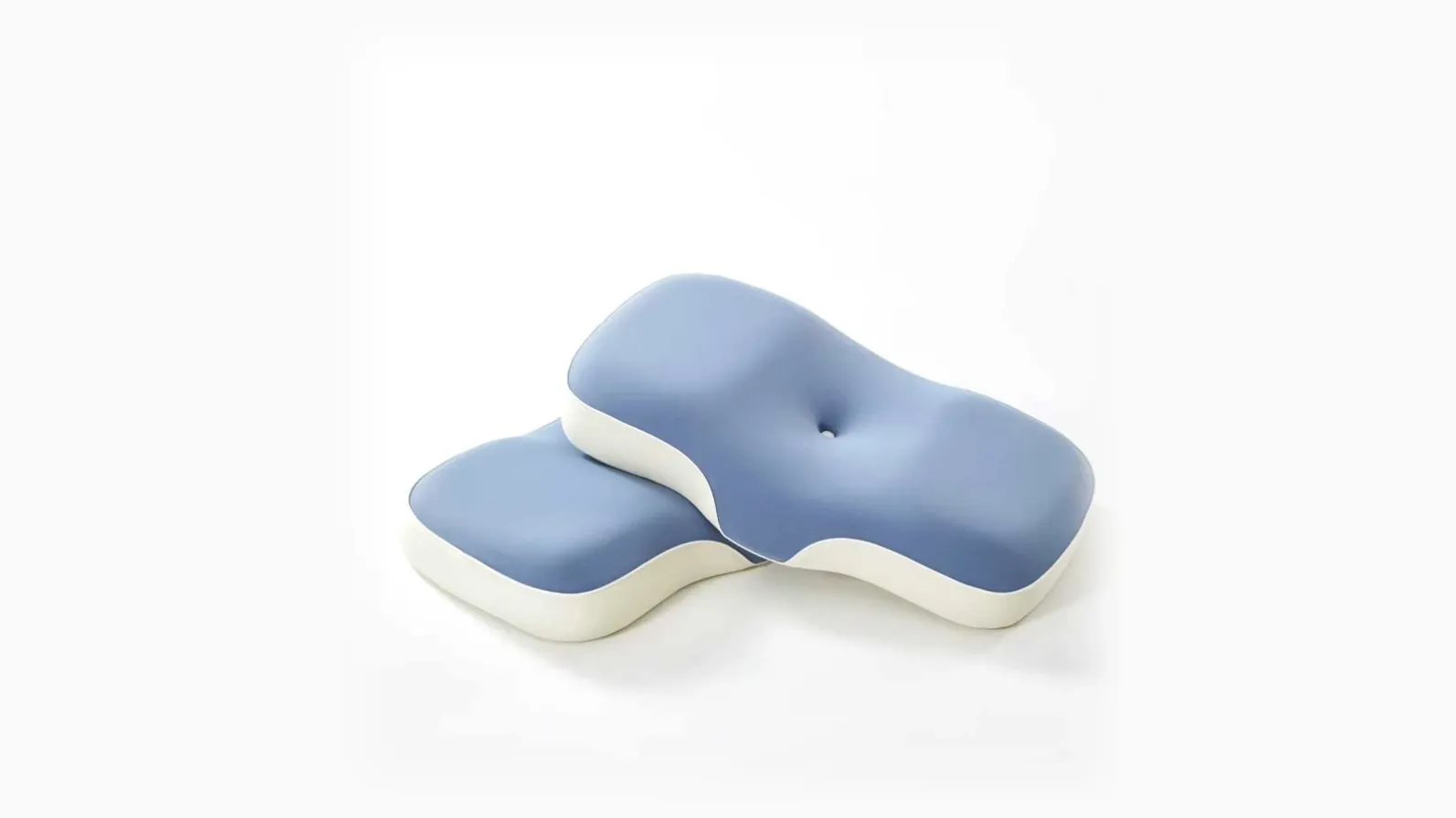
A container of roll-packed pillows arrives with three crushed cartons on the bottom layer, and the first question is always the same: is this a freight claim or a manufacturing defect. The second question comes a day later, when a buyer opens a compressed pillow that has not fully risen back and wants to know whether it is ruined. Both questions are answerable, but only if the packaging spec and the claim procedure were agreed before the order shipped, not argued over photographs afterward.
This guide sets out the clauses a buyer should have in writing before a pillow order reaches the packing line. It covers how to specify a carton, what drop and stacking tests actually verify, how to tell a pillow that needs more recovery time from one that has taken a permanent set, and what evidence a carrier or insurer will accept. We supply direct from the factory at MOQ 50 Pcs, roll-packed, with a catalog and FOB quotes on request.
Put the Damage Terms in the Purchase Order
Freight damage disputes are rarely about what happened. They are about what was agreed. The purchase order should carry a short packaging and claims clause, written while the spec sheet is still open.
- Governing spec — name the carton grade, the packing method and the accepted test standard as the reference documents. Vague lines such as "export standard carton" give neither side a measurable target.
- Risk transfer — state the agreed Incoterm, because it fixes the point at which damage stops being the factory's cost and becomes the buyer's or the carrier's. EXW and FOB place that point at different places, and the quote should say which one applies.
- Claim window — a stated number of days from arrival for written notice, and a shorter window for concealed damage discovered after unpacking. Without a window, a claim filed six weeks later is almost impossible to assess.
- Evidence list — what the buyer must capture at receiving, set out in advance so the warehouse team knows what to photograph.
- Remedy — repair, replacement in the next shipment, credit against the balance, or a unit-price deduction, agreed as a ladder rather than invented per incident.
These five lines turn a damage event into a defined process. Two quote levels, EXW and FOB issued against the confirmed spec, keep the responsibility boundary visible on the commercial side as well.
Specify the Carton, Not Just the Pillow
A roll-packed pillow is small and light, which makes the carton easy to under-specify. The saving looks harmless until a full container is stacked five or six layers high for a month at sea.
- Corrugate — a five-layer double-wall board for master cartons on long sea routes; single-wall is acceptable for short air or domestic legs. Ask for the board construction, not a marketing grade.
- Edge crush test — ECT is the number that predicts stacking strength. State a minimum ECT value in kN/m or lb/in on the PO, and ask for the mill certificate or a lab report against that value.
- Bursting strength — a Mullen rating is an older but still quoted measure; if the buyer's market uses it, name it separately from ECT so the two are not confused.
- Carton dimensions — the roll-pack carton is 20 x 20 x 41 cm, confirmed against the final spec sheet. State how many units per carton, because a loose overfill crushes the pillows and an underfill lets the stack shift.
- Moisture — corrugated board loses a large share of its stacking strength in high humidity. For humid destinations, ask for a moisture-resistant board or a higher ECT margin, and keep cartons off container floors with pallets or dunnage.
- Closure and strapping — tape width, the tape pattern, and whether cartons are palletized, stretch-wrapped and corner-boarded. A well-specified carton on a badly unitized pallet still fails.
The reason to be this specific is that roll-packing cuts shipped volume by about 60 percent compared with flat-packed pillows. That is the freight saving buyers want, and it also means more cartons and more stacked layers per container, so the board has to carry more load.
What Drop and Stacking Tests Actually Verify
Packaging tests are not a promise that nothing will ever break. They are a repeatable way to compare one carton design with another before a full order is committed.
- Drop test — a defined sequence of drops from a set height onto edges, corners and faces. ISTA and ASTM D4169 are the commonly referenced protocols; name the procedure and the pass criteria rather than "drop tested".
- Vibration — a truck or container vibrates for days. A vibration sequence in the same protocol helps catch abrasion and compression that a single drop misses.
- Compression or stack test — a load held for a defined period, often expressed as a multiple of the expected warehouse stack. This is the test that predicts the crushed bottom layer in the opening example.
- Conditioning — test cartons after conditioning to a stated temperature and humidity, because board tested dry in a lab behaves differently from board in a humid hold.
- Report — a dated test report tied to the exact carton spec, not a generic certificate for a different product. Third-party test reports can be supplied on request.
One carton that passes a drop sequence does not prove the whole container will arrive intact. It proves the design was checked against a stated method. Buyers consolidating several SKUs into one container should ask that the heaviest carton, not the lightest, set the test load.
Separate Freight Compression from a Permanent Set
This is the question that costs the most re-work: a pillow that comes out of the bag flat and low, and whether it is damaged. Roll-packed memory foam is supposed to be compressed. Slow recovery is normal for a period; a true compression set is not.
- Recovery window — measure loft at 24 hours and again at 72 hours after opening, on a flat plate at room temperature, and record both. Most of the recovery happens in the first day.
- Rebound — 100% PU slow-rebound foam in 45D or 50D returns in 3 to 5 seconds measured to the agreed method. A core that stays slow well past the 72-hour mark is a different finding from one that is simply cold.
- Temperature — cold foam recovers slowly. Let the pillow condition to room temperature before judging it; a winter container opened in an unheated warehouse will look worse than it is.
- Compression set — a permanent loss of thickness after sustained load is a material property, measured to a method such as ASTM D3574, not a visual guess. If a lot shows set across many units, that points to the foam batch, not to one rough journey.
- TPE grid cores — TPE elastomer open-cell grid pillows behave differently. They are washable, latex-free and breathable, typically 60 x 40 or 70 x 40 cm with a 10 to 15 cm loft and a 1.7 to 2.6 kg weight, and they recover by structure rather than by viscoelastic creep. Do not apply the PU recovery window to them; judge them against their own spec.
Document the recovered loft against the tolerance in the spec sheet. A measured number ends the argument faster than a photograph of a flat pillow.
Build the Evidence Chain at Receiving
A carrier or insurer assesses a claim on evidence captured at the door, not on recollections. Give the receiving team a short checklist.
- Before unloading — photograph the container or truck seal, the door, and the overall stack, including any visible crush, tilt or water marks.
- At the carton — photograph the crushed carton in place, then all six faces, the shipping mark and any puncture or wet staining. Keep the carton, do not discard it.
- At the unit — photograph the pillow, its inner bag and label together, with the carton mark visible in the same frame where possible.
- Counts and lots — record the SKU, production lot, roll-packing date and the number of affected units. A carton mark carrying these fields makes the link back to the foam batch and fabric dye lot possible.
- Written notice — send the claim within the agreed window, with the bill of lading, packing list, commercial invoice and the photographs attached. Late notice is the most common reason a valid claim is declined.
- Concealed damage — for damage found after unpacking, note the shorter discovery window and keep the inner bag and carton until the claim closes.
Photographs taken after cartons have been unpacked and the packaging thrown away are the hardest claims to settle. The evidence list in the PO exists precisely to prevent that.
Define What Counts as Damage
Not every mark on an arrived pillow is freight damage, and treating it as such dilutes a real claim. Agree the categories on the spec sheet.
- Transit damage — crushed or punctured cartons, wet or stained units, torn covers from handling, or loft loss that does not recover within the measured window.
- Manufacturing defect — wrong size, wrong cover, dye-lot colour drift, a seam fault, or a compression set that appears across a whole foam batch. These are handled through the inspection and quality process, not a freight claim.
- Cosmetic tolerance — a light crease on a cover or a faint impression from the roll-pack that disappears within the recovery window is within tolerance. State the tolerance rather than leaving it to opinion.
- Care limits — PU cores are not washable; only the removable cover should be laundered. Water damage is assessed against that limit, and a wet PU core is not recoverable by drying.
Classifying correctly matters because the remedies are different. A misclassified manufacturing defect sent to a carrier wastes the claim window, and a misclassified transit damage sent back to the factory wastes a production investigation.
Close the Loop With the Spec Sheet
The cleanest damage claim is the one that never has to be filed, and it starts with a spec sheet that a packer can actually follow.
- One controlled document — the carton grade, ECT, unit count, roll-pack carton size, pallet pattern and the pack date all live on the same spec sheet that carries the foam density, cover fabric and label details.
- Pack date on the carton — keeping packing dates on the outer carton gives better control across several SKUs in one container, and makes a damage cluster traceable to a single production run.
- Sealed sample — keep an approved packed sample as the reference for both the carton and the recovered loft, so a dispute compares two physical things rather than two descriptions.
- Pilot run — for a new shape or a new carton, run the drop and stack sequence on the first production cartons before the full lot is rolled. A new contour is listed separately for cost and lead time; samples take 7 to 10 days.
Start from the closest model in the current catalog rather than opening a new mold. Logo, woven label, cover colour and retail packaging are the customization items; a change to foam density, loft or carton construction is a different conversation with a different lead time, and we will say so rather than fold it into a label revision.
Where the Boundaries Are
A few limits are worth stating plainly, because they shape what a packaging clause can promise.
- A test report is not a zero-defect guarantee. It documents that a defined carton passed a defined method on a given date.
- AQL sampling and pre-shipment inspection do not replace a packaging test, and a packaging test does not replace an inspection. They answer different questions.
- MOQ is 50 Pcs per style for trial orders, with tiered terms for larger volumes. Custom retail boxes and printed cartons are quoted separately and are not opened for a 50-piece trial run.
- Compliance documents — CertiPUR-US and OEKO-TEX documentation, plus third-party test reports, can be supplied on request and tied to the production lot. Foam properties are measured to ASTM D3574. We do not certify a buyer's destination-market packaging or labeling rules; that determination belongs to the importer.
- EXW and FOB are quoted separately, with plate, tooling and artwork charges on their own lines rather than folded into a unit price.
- Care limit — PU cores are not washable; only the removable cover should be laundered, and a wet core is assessed as damage.
These limits are not hedges. They are the lines that let both sides price the risk correctly before the container is loaded.
Request the Packaging Spec and a Quote
If you want the carton grade, ECT, drop-test reference and claims clause written into your next pillow order, send the target volume, the destination port, the stacking plan and any packaging artwork you already have. We will return a spec sheet with the recovery test method, the evidence checklist and the two quote levels, EXW and FOB, aligned to your programme.
Request the catalog, an FOB quote and a sample. Contact our sourcing team at +86 137 7374 7840 or info@pillowcontract.com.


