Memory Foam Pillow Labeling and Packaging Compliance: An OEM/ODM Wholesale Guide to Care Labels, Origin Marking and Retail Barcodes
Direct Factory labeling guide: MOQ 50 Pcs, Roll-packed, Catalog & FOB Quotes. Fiber content rules, ISO 3758 care symbols, origin marking, GS1 barcodes, woven labels and the packing data to request bef
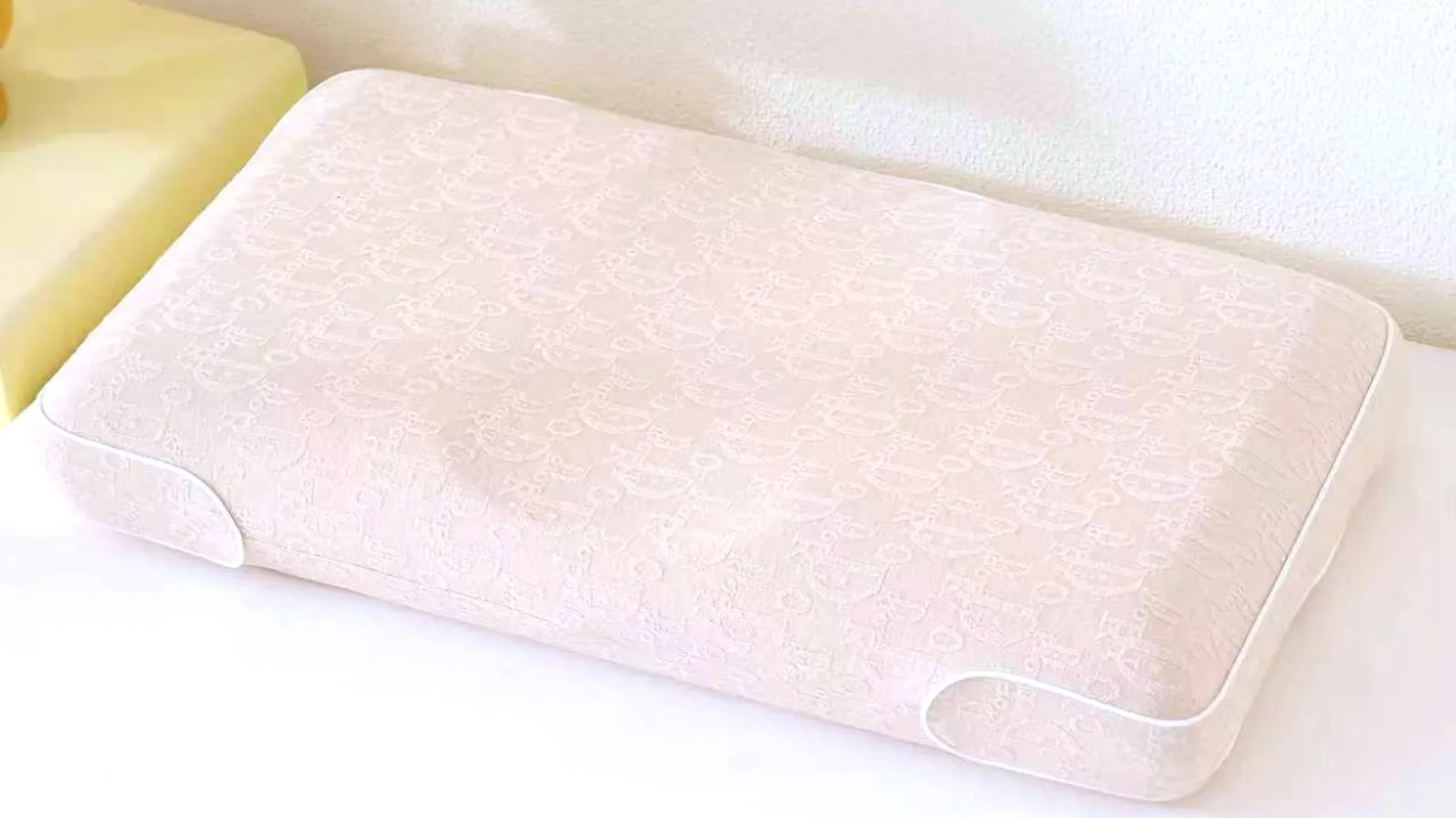
A container of pillows can clear customs and still be turned away at a retailer's receiving dock because the sewn-in label says the wrong thing. The foam passed its tests. The cartons are fine. The label carries a marketing fabric name instead of the fiber content, or the country of origin on the carton does not match the commercial invoice. Fixing it means a relabeling crew, a delayed shelf date, and a buyer asking why nobody checked earlier.
Labeling is the part of a private-label pillow program that nobody budgets for and everybody signs off on late. This guide covers what has to be printed, sewn and scanned before a memory foam pillow ships, which documents should arrive with the quote, and where a small trial order runs into real print minimums.
What US and EU Rules Actually Ask For
In the United States, the Textile Fiber Products Identification Act requires a permanent label showing fiber content by percentage, the country of origin, and the name of the responsible company or its RN number. That applies to the cover, not to the foam core, and it applies to every unit rather than just the outer carton. Buyers sometimes ask for a bamboo or cooling ice silk fabric name on the sewn label. Those are trade descriptions. The label has to state the actual fiber composition, for example a polyester or viscose blend with percentages, and the trade name can sit alongside it in marketing copy.
For the EU, Regulation (EU) No 1007/2011 requires textile fiber composition to be given in the official language or languages of the member state where the product is sold. A single English-only label will not serve a program shipping to several markets. We ask for the destination list at the quote stage, because adding a second language afterwards means reprinting the label roll after it has already been cut.
We send a PDF proof of the label artwork with the quote, and a photo of the label sewn onto the approved sample before production starts. That proof is the document to approve. A verbal sign-off in a chat thread is where mismatched fiber names creep in.
Care Symbols Need to Match the Core, Not the Marketing
ISO 3758 fixes the order of care symbols: washing, bleaching, drying, ironing, then professional care. A cover can be removable and washable while the core is not. Our 100% PU slow-rebound foam is specified at 45D or 50D with a 3-5 second recovery, and it is not a washable core. The care label has to say the cover is removable and washable, and that the foam is aired or wiped only. Printing a tub symbol next to a PU pillow is the most common mistake we see on buyer-supplied artwork.
The TPE grid products are a different case. An open-cell TPE elastomer core is washable, breathable and latex-free, so the care label on those SKUs can carry a wash instruction for the core itself, but only on that line. Mixing the two label templates across a mixed container is an easy way to ship a non-compliant product.
One limitation worth stating plainly: we will not print a care claim the construction of that SKU cannot support. If a buyer wants machine washable on a PU pillow, we quote a removable washable cover, put the instruction on the cover, and leave the foam claim off.
Country of Origin Has to Agree Across Four Places
Made in China on the sewn label, the carton mark, the commercial invoice and the certificate of origin must agree. Customs officers and retailer compliance teams compare them. A mismatch is treated as a documentation failure even when the goods are physically correct.
This matters more now that some programs split production between two countries. If China-origin foam is finished elsewhere, the origin claim depends on where substantial transformation happened, not on where the pillow was sewn. We state where the foam is made and where the pillow is assembled in the quote. A sourcing guide cannot make the origin call for you; a certificate of origin that matches the physical supply chain can. Ask the factory to put the input trail in writing before the first container, not after a customs query.
Who Owns the Barcode
The brand owns the GTIN. We print and apply it. GS1 registration, the company prefix and the allocation of EAN-13 or UPC-A numbers stay with the buyer, because the number has to be licensed to the brand putting the product on the shelf. We ask for the GTIN list per SKU as a spreadsheet, not as a screenshot in a messaging thread.
We run a scan check on the first article of each SKU and include the scan photo in the pre-shipment file. Barcodes printed too small, sitting on a fold, or losing their quiet zone fail at the receiving scanner. Catching that on the first unit costs nothing. Catching it after a full production run is packed costs a relabeling shift and a late delivery.
Where Logo, Label and Carton Costs Actually Sit
Buyers usually ask three separate questions and get one blended answer: does branding change the unit price, is there a one-time charge, and which Incoterm does the number refer to. They are three lines on a quote, not one.
- Woven label — we sew your artwork into the cover; the label cost is a per-unit line.
- Printed retail box or printed carton — one-time set-up or plate charge, quoted separately and named as such.
- Unit price — quoted EXW or FOB, with the term written next to the number, never assumed.
- Artwork — a vector file with the color reference; we return a proof for sign-off before the roll is printed.
A 50-piece trial order is a reasonable way to test a new SKU. It is not a reasonable way to print five custom retail boxes. Carton print runs carry their own minimum, comfortably above 50 units, so for a trial we use a plain export carton, your woven label inside, and a barcode sticker on the carton. The printed box moves to the repeat order. Saying that up front saves a buyer from paying a plate charge on a test they may never repeat.
We start from the closest model in the current catalog rather than opening a new mold. Logo, woven label, cover color and packaging are the customization items. A change to foam density or loft is a different conversation with a different lead time, and we will say so rather than fold it into a label revision.
Packing Data to Request Before You Book Freight
Freight is costed on cube. A roll-packed pillow compressed to roughly 20 x 20 x 41 cm cuts volume by about 60 percent against a lofted pack, which is why the roll-pack spec belongs in the same email as the quote. Ask for carton dimensions, units per carton and gross weight per carton for the specific SKU. We put those three numbers in the FOB quote instead of a generic figure, because they change with loft and pillow size.
If you nominate your own forwarder, say so before the booking is made, and state who collects the goods and where. The carton mark, the barcode sticker and the packing list all have to match that collector's paperwork. A buyer who prices freight from a guessed carton size will redo the landed-cost model after the first shipment.
Two Samples, Not One
We usually send two: a plain pillow and one with your label sewn in. The first is for feel, loft and recovery. The second is for artwork, stitch position and label placement, none of which a PDF proof shows properly. Sample lead time is 7-10 days for a standard model with an existing cover, longer if the cover fabric changes. Production lead time is quoted per order size and separately from sample lead time. A slot discussed during peak season is not a confirmed production date until the deposit is in.
Sample cost and whether it is credited against a later order are commercial terms, not assumptions. We confirm both in writing with the quote, and we can dispatch to a designated consignee, including a domestic agent rather than an overseas address.
Documents That Belong in the Same Email as the Quote
Certificate copies, not claims. For a PU foam program that means the CertiPUR-US certificate for the foam and the OEKO-TEX STANDARD 100 certificate for the cover fabric, each with its issuing body and validity date, plus a foam test report against ASTM D3574. We keep both on file per production lot so the certificate matches the batch being paid for. Ask for the business licence and the quality-system certificate too if supplier qualification is part of your process.
Then the labeling file: the approved artwork PDF, the sewn-label photo from the sample, the AQL inspection level, and the first-article barcode scan. A buyer holding all of those before the balance is due can approve or reject on evidence. If a supplier sends the certificates only after a second request, treat that as information about how the next audit will go.
Where Labeling Gets Rejected
The failures repeat. A trade fabric name printed where fiber content belongs. Care symbols in the wrong order, or a wash claim on a core that cannot be washed. A carton marked with one origin and an invoice showing another. A barcode that scans on the proof but not on the finished pack. A California program that never asked whether a Proposition 65 warning applies to that SKU, a determination that sits with the brand's compliance adviser. We will not guess at it on the artwork.
None of these are foam problems. All of them are checkable before the container is loaded.
A Pre-Shipment Check Worth Ten Minutes
- Fiber content — percentages match the approved artwork, not the marketing name.
- Care symbols — ISO 3758 order, and the claim matches whether the core is PU or TPE.
- Origin — sewn label, carton mark, invoice and certificate of origin agree.
- Barcode — first-article scan photo on file for every SKU.
- Carton data — dimensions, units per carton and gross weight match the quote.
- Certificate set — foam and fabric copies tied to this production lot.
If your program is adding a new market or a retail channel and you want the label artwork, certificate set and carton data reviewed against the actual SKUs, contact +86 137 7374 7840 or email info@pillowcontract.com for the catalog, an FOB quote with the Incoterm stated, and the packing sheet for the models you are shortlisting.


