How Long Can Roll-Packed Memory Foam Pillows Stay Compressed? An OEM/ODM Wholesale Guide to Storage Limits, Shelf Life and Loft Recovery
Direct Factory storage guide: MOQ 50 Pcs, Roll-packed, Catalog & FOB Quotes. Compression windows, heat and humidity limits, recovery test methods, lot coding and the clauses that belong in a purchase
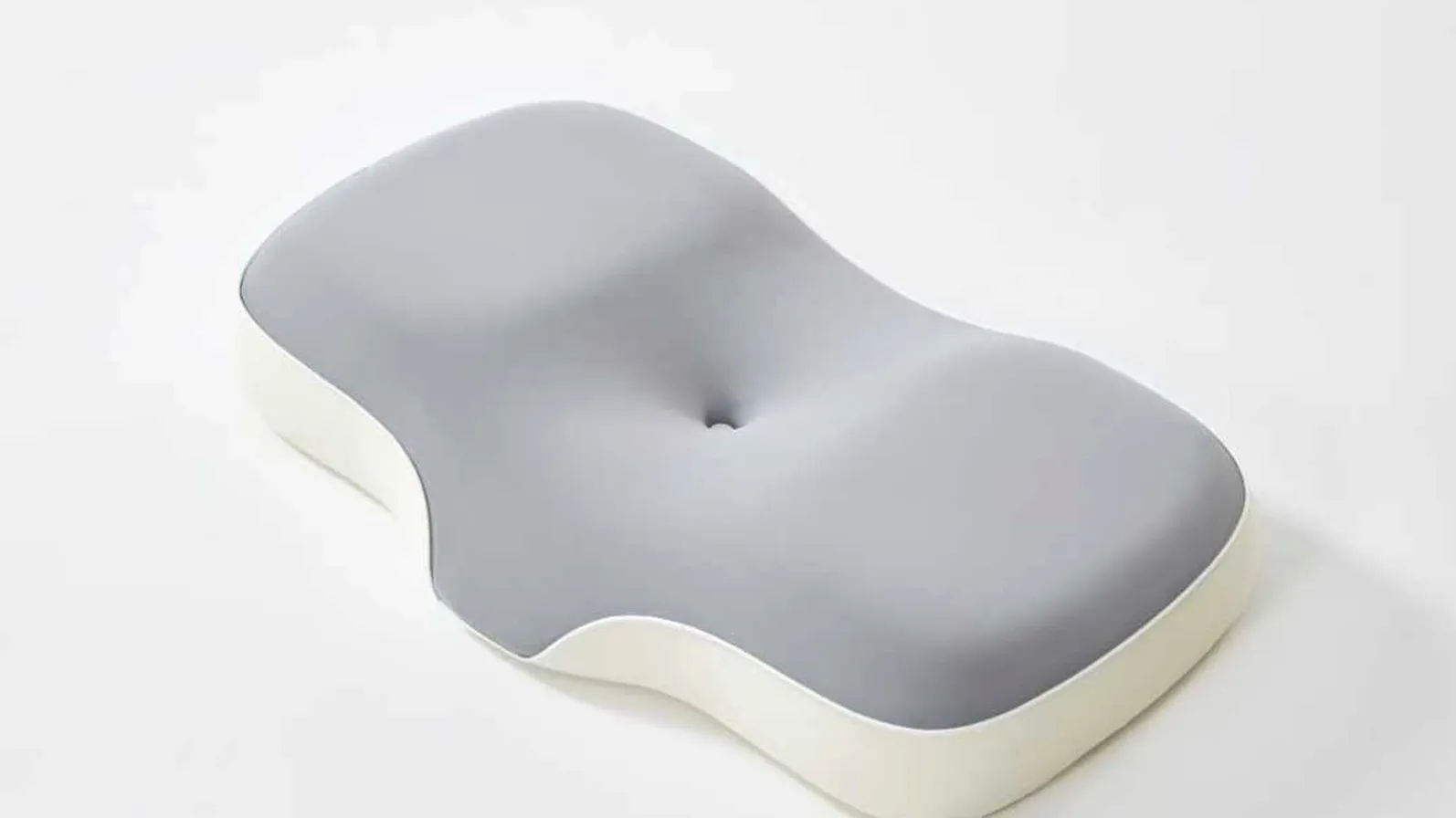
A roll-packed pillow can sit in a carton for a week or for a full season and look identical from the outside. What changes is inside the foam. Most sourcing conversations cover the packing method and the freight saving, then stop. The harder question arrives later, usually when a container has been delayed: how long was this pillow allowed to stay compressed, and how would we know if it recovered?
Those are two separate questions. One is a storage specification, the other a test method. Neither is answered by "vacuum packed" on a quotation. This guide covers what a buyer should ask a pillow factory to put in writing, which numbers need a measurement condition, and where the practical limits are. We supply direct from the factory at MOQ 50 Pcs, roll-packed, with a catalog and FOB quotes on request.
Compression Is a Process, Not a Permanent State
A 100% PU slow-rebound core is viscoelastic. Under load, air is pushed out of the cells and the polymer network slowly rearranges around the reduced volume. Release the pressure and the foam takes time to draw air back in. That is recovery. Hold it compressed long enough, particularly at elevated temperature, and part of the deformation stops being reversible. That is compression set: a pillow that never quite reaches its original loft.
- Rebound time — 3–5 seconds for a 45D or 50D core is a handling characteristic measured on an uncompressed pillow at room temperature. It does not predict behavior after eight weeks in a roll.
- Density — 45D and 50D are the common builds. Denser foam generally holds shape better over repeated loading, but density is not a storage guarantee.
- Loft recovery — the height a compressed pillow returns to after opening. This is the figure that needs a written test condition, because every other recovery claim depends on it.
A buyer asking whether a pillow "bounces back" and a factory answering with a rebound time are talking about different things.
Set a Maximum Compression Window, Not a Vague Shelf Life
"Shelf life 12 months" mixes the life of the foam, the life of the cover, and the time the pillow may remain under load. Ask instead for a maximum compression window: days from the roll-packing date during which the pillow may stay compressed under an agreed storage condition.
- Starting point — ask the factory to state a window in writing, commonly 90 days as a working target, and to re-validate anything beyond 180 days. These are clauses to negotiate against the actual foam formulation, not an industry standard or a blanket promise.
- Trigger date — the roll-packing date on the carton, not the foam production date or the invoice date. A core molded in March and rolled in June has two different clocks.
- Storage condition — the temperature and humidity range the window was validated under. A window with no condition attached is not a specification.
- Consequence — what happens to a lot that passes the window: isolation, a recovery check, and a documented release or rejection, agreed before the order.
Five lines on the spec sheet settle this. Without them, the oldest cartons in a warehouse are the ones nobody can approve.
Heat Is the Variable That Shortens the Window
The foam experiences accumulated heat, not a calendar. A sea shipment commonly runs 30–45 days port to port, and customs holds or a missed sailing can add weeks. Cartons near container walls or under the roof see temperatures well above ambient, and PU softens as it warms, which accelerates creep under sustained load. Cold stiffens it and slows recovery, so a pillow opened in an unheated warehouse in winter looks worse at hour two than at hour twenty-four.
- Storage ceiling — agree on one in the spec sheet; many programs set it below 40 C and make it a receiving condition rather than a material warranty.
- Stowage — keep roll-packed cartons off container walls, avoid top-tier positions, and palletize so air can move around the stack.
- Transit buffer — build the window backward from the worst credible door-to-door time. If the window is 90 days and realistic transit is 60, little room remains for warehouse dwell.
- Opening sequence — condition a sample at room temperature before judging loft from a cold container.
None of this requires a new material. It requires the quotation and the warehouse to use the same clock.
Humidity Attacks the Pack Before It Attacks the Core
Moisture usually shows up outside the foam. Knitted covers in Bamboo Fiber or Cooling Ice Silk can pick up odor in a poorly ventilated carton. Corrugated board loses stacking strength, printed boxes delaminate, and zippers are the first visible casualties. A sealed polybag can also trap condensation when cartons move between climates.
- Inner pack — specify the polybag, whether it is vented, and whether a desiccant is included for long or humid routes.
- Outer pack — carton grade and any moisture barrier, agreed against the destination climate.
- Yard time — avoid open-air storage between factory, port and container. Most moisture damage happens in the gaps, not at sea.
- Remedy — the PU core is not washable and should never be described as such. Washing is a property of a removable cover, or of a TPE grid pillow.
For humid destinations the packing clause is worth as much as the foam clause, and it is the cheaper one to fix.
Write the Recovery Test Into the Spec Sheet
A recovery figure without a method is a number nobody can audit. Agree on the test before samples are approved, then use it on pre-shipment samples and on any overdue lot.
- Conditioning — open the pack and rest the pillow flat at room temperature. Read at 24 hours and again at 72; the second reading is the one that matters for a slow-rebound core.
- Measurement — record loft with a flat plate resting lightly on the crown, not a tape pulled across a curve. State the measuring point on a drawing.
- Acceptance — a stated percentage of nominal loft or an absolute range in millimeters, plus the production tolerance the factory commits to in writing. Without a tolerance there is no basis for calling a piece short.
- Reference — keep two or three uncompressed samples from the same lot as controls. They cost almost nothing and end most arguments about whether a batch changed.
- Documents — report density and recovery against the method named on the spec sheet (ASTM D3574 is the usual reference for foam properties). CertiPUR-US covers the foam, OEKO-TEX STANDARD 100 the fabric; ask for copies tied to the production lot, not a generic earlier certificate.
Third-party test reports can be supplied on request. The report, the spec sheet and the carton label should describe the same batch.
The Carton Data That Belongs in the Quote
Freight is costed on the carton. A 60 x 40 cm pillow roll-packs to roughly 20 x 20 x 41 cm, cutting about 60 percent of the volume compared with a lofted pillow in a full-size box. That saving only helps if the packing numbers arrive with the quotation.
- Three numbers — carton dimensions, units per carton, gross and net weight. A container loading plan derives from these.
- Trade terms — EXW and FOB as separate lines with the named port. Plate charges, new cutting dies and artwork setup listed separately, not folded into a unit price.
- Two price tiers — a 50-piece trial and a production quantity, each with its own lead time. Sampling runs 7–10 days; mass production lead time is quoted against order volume and should not be confused with it.
- Trial limit — a 50-piece order suits an existing shape in a plain pack. It is not the right quantity to open printed retail cartons, and we will say so rather than quote artwork that will be obsolete next order.
Ask for the packing sheet with the quote. Five lines move landed cost more than a small negotiation on unit price.
Lot Codes and FIFO Decide Whether the Window Means Anything
A written window is only useful if someone can tell which cartons are oldest. Warehouses rotate by arrival date, which is not the roll-packing date when shipments are consolidated or split.
- Carton mark — SKU, production lot, roll-packing date, piece count. The lot should trace to the foam batch and the fabric dye lot.
- Rotation — first in, first out by roll-packing date. If the system only stores a receipt date, add the packing date as a separate field.
- Overdue lots — quarantine, draw samples, run the agreed 72-hour check against the controls, then release or reject in writing. Do not re-roll a pillow to reset its date; a second compression cycle is not neutral.
- Replenishment — plan the order around the window as well as the forecast. Peak-season stock bought early is the stock most likely to test the limit.
Keeping packing dates on the outer carton rather than only in an office document gives better control across several SKUs in one container.
TPE Grid Pillows Need a Separate Clause
A TPE elastomer open-cell grid is a different material, not a PU variant. It is washable, air-permeable and latex-free, commonly 60 x 40 or 70 x 40 cm with a 10–15 cm loft and a 1.7–2.6 kg piece weight. The open grid recovers through its structure rather than through viscoelastic behavior, so the density, rebound and compression-window figures above do not transfer.
- Separate parameters — ask for the TPE packing method, maximum time in compression, and recovery criterion as their own line items.
- Separate samples — a TPE and a PU sample approved under one shared spec sheet produce the wrong production sample almost every time.
- Care wording — washability belongs with the TPE grid pillow. Do not carry it into PU copy, or PU density figures into a TPE listing.
If a program includes both constructions, keep two spec sheets. It is less paperwork than resolving a mixed container after it ships.
What a Supplier Should Put in the Quote, Line by Line
The useful quote turns into a purchase order without a second round of interpretation:
- Two price tiers with EXW and FOB stated separately, plus plate, tooling and artwork charges as their own lines.
- Two samples — a plain sample for construction and a second with the buyer's label or woven mark, both inside the 7–10 day window.
- Five storage lines — roll-packing date rule, maximum compression window, storage condition, recovery test with acceptance criteria, overdue-lot procedure.
- Packing sheet — carton size, units per carton, gross and net weight, loading calculation based on those figures.
- Certificate copies tied to the lot, for foam and fabric separately.
- Payment milestones tied to defined events, with the inspection basis named.
- A starting point — the nearest existing shape, with any new mold or contour listed separately for cost and lead time.
We do not register barcodes, decide market-specific warning labels, or make regulatory determinations for a destination market; those sit with the brand owner and its compliance adviser. Stating that boundary in the first email is cheaper than discovering it at the labeling stage.
The Limits Worth Stating Up Front
No factory can honestly promise a compressed pillow will never take a set. A compression window is a negotiated specification validated against a specific formulation and a stated storage condition, not an unconditional warranty. A PU core cannot be washed. A 50-piece trial does not justify printed retail packaging. TPE grid pillows need their own parameters. These are not defects in the supply chain; they are the terms under which the product behaves predictably.
Write them down, attach a test method to each number, and the conversation after a delayed container becomes a check against an agreed sheet instead of a debate about assumptions.
For the catalog, a spec sheet template, or an FOB quote with carton data, contact info@pillowcontract.com or WhatsApp +86 137 7374 7840. Send the destination market, the construction you are working from and the quantity, and we will come back with the packing numbers and the storage clauses that apply.


