Memory Foam Pillow vs Polyester Fiberfill Pillow: A Buyer's Specification Comparison
A technical comparison of memory foam and polyester fiberfill pillows for B2B buyers: core material, support, density, durability, thermal behavior, certifications, packaging, and MOQ.
Core Material and Structure
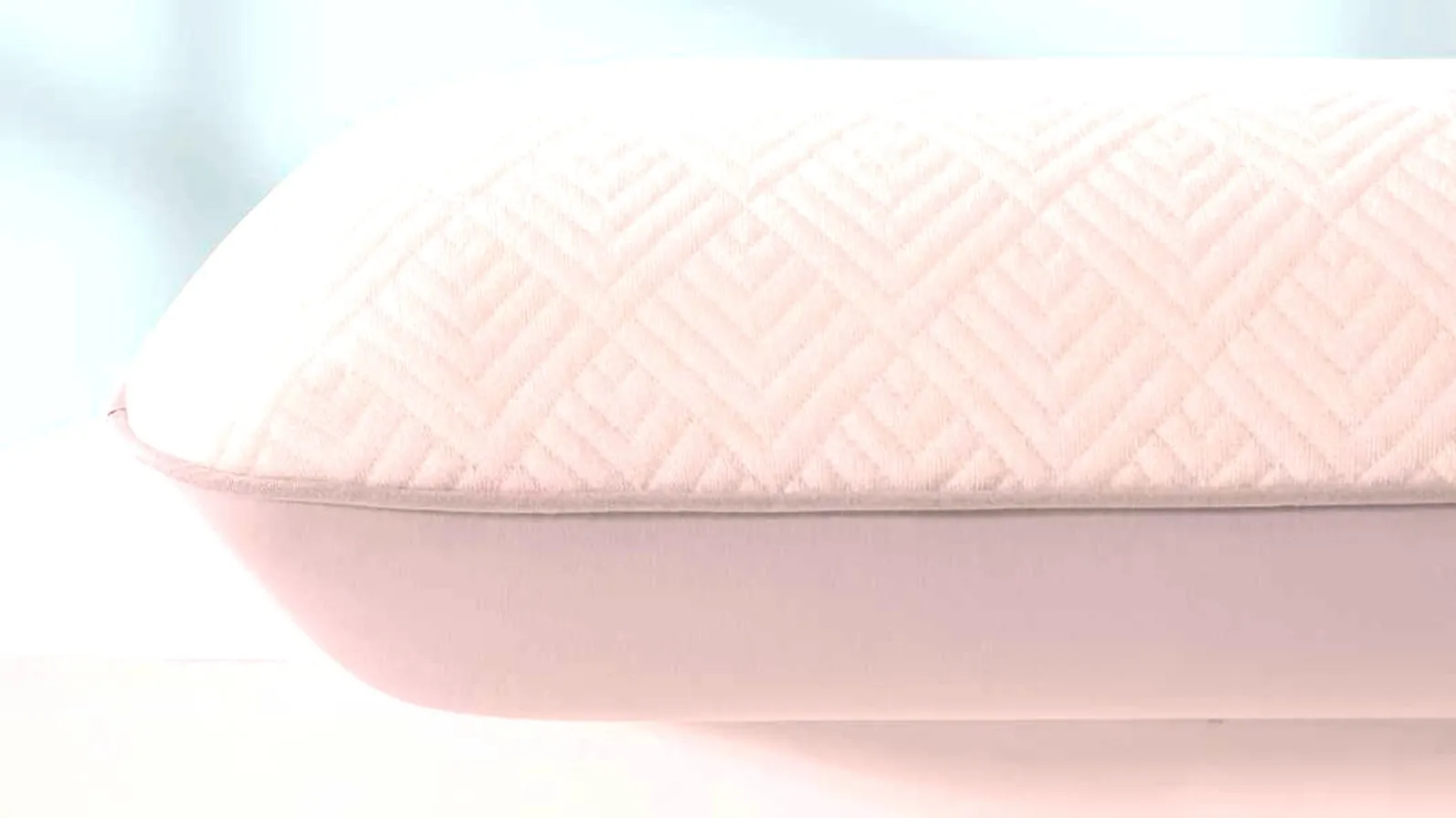
A memory foam pillow is built from viscoelastic polyurethane foam. The core is a continuous block of slow-rebound PU foam, typically rated at 45D or 50D density, with an open-cell structure that softens under body heat and returns to shape over 3 to 5 seconds after pressure is removed. A polyester fiberfill pillow is filled with clusters of polyester staple fiber blown loose into a sewn shell. There is no solid core; the loft comes from how the fibers are packed.
For a procurement buyer, the structural difference matters before anything else. A foam core is a defined component with measurable density and ILD. A fiberfill is a loose fill whose firmness depends on fill weight per unit volume and shifts during use.
Support Mechanics and Pressure Relief
Memory foam distributes load across the contact surface. Because the material deforms to the head and neck contour, it reduces peak pressure points and keeps the cervical spine closer to neutral. This is why contour and cervical shapes are cut from a single foam block rather than assembled.
Polyester fiberfill pushes back with air trapped between fibers. It conforms loosely but does not hold a precise contour. Over a few weeks the fibers migrate, the loft flattens in the center, and support becomes uneven. Buyers specifying for hospitality or healthcare programs should expect measurable loft loss in fiberfill products that does not occur in a molded foam core.
Density, Durability and Service Life
Density is the single most useful number when comparing foam. A 45D or 50D core holds its shape for years under repeated compression. Compression set, measured per ISO 1856, tells you how much the foam permanently deforms after a loaded heat cycle. Low compression set means the pillow does not sag.
Fiberfill has no density rating in the same sense. Its life is governed by fiber denier and resiliency, and in practice it clumps and flattens within one to two years of nightly use. For contract and wholesale programs where replacement cycle cost matters, the longer service life of a foam core is a direct line item, not a marketing claim.
Thermal Regulation
Open-cell PU foam breathes better than closed-cell alternatives, but it still traps more heat than loose fiber. The thermal story for memory foam is therefore carried by the cover, not the core. Bamboo fiber and cooling ice-silk covers move heat away from the skin and are the standard specification for export-grade foam pillows.
Polyester fiberfill allows more air movement through the fill, so it feels cooler initially. That advantage fades as the fibers compact and trap heat in the same way. A buyer choosing on temperature should compare the cover fabric specification first, then the core.
Certifications and Material Transparency
This is where the two categories diverge most clearly on the compliance desk. Export memory foam should ship with CertiPUR-US for foam content and low VOC, plus OEKO-TEX Standard 100 for the cover fabric. Both are document-backed and auditable, which matters for EU and North American retail and contract channels.
Polyester fiberfill is rarely certified to the same foam-standard regime because there is no foam. Buyers still need OEKO-TEX or equivalent for the shell and fiber, but the material-transparency story is thinner. If your downstream market asks for CertiPUR-US, a fiberfill product simply cannot present it.
Packaging and Freight Efficiency
A foam pillow is bulky until it is compressed. Rolled and vacuum-packed, a molded foam core shrinks to roughly 20 by 20 by 41 centimeters, cutting carton volume by around 60 percent. That reduction is the difference between a 40-foot container holding a few thousand units and holding well over ten thousand.
Fiberfill compresses too, but it rebounds the moment vacuum is released and must be boxed at near-finished loft, or it arrives as a flat brick the buyer has to fluff by hand. For freight-sensitive programs, roll-packed foam with a clear recovery window (24 to 48 hours after opening) is the more predictable import.
OEM/ODM Customization and MOQ
A foam core is cut to a mold, so shape, loft, firmness (ILD), and cover fabric are all specifiable. That makes memory foam the stronger base for private-label and OEM/ODM programs: you define the contour, the density, the cover, and the packaging, and the factory produces to that bill of materials.
Fiberfill customization is mostly shell fabric and fill weight. You cannot redefine the internal support geometry the way you can with a molded core. For buyers building a differentiated SKU rather than a commodity fill, foam gives more controllable levers. Production can start from a low MOQ of 50 pieces per SKU with sample lead time of 7 to 10 days.
Care and Maintenance
Neither core should be machine-washed as a whole. The foam block degrades if saturated; the fiberfill clumps if washed as loose fill. In both cases the correct specification is a removable, washable cover and a spot-cleaned inner.
The practical difference is recovery. A foam core that is kept dry and covered lasts through multiple cover cycles. Fiberfill loses loft even with careful use and eventually needs full replacement rather than a cover swap. For laundry and care-label planning, foam is the lower-touch option over the product lifetime.
Which Buyer Should Choose Which
Choose memory foam when the program needs defined support, certified materials, long service life, and a customizable OEM/ODM base with efficient roll-pack freight. It fits hospitality, healthcare, ergonomic retail, and private-label lines where the SKU must be defensible on spec.
Choose polyester fiberfill when the priority is the lowest possible landed unit cost for a disposable or promotional item, and where certification and contour support are not contract requirements. It is a valid commodity fill, not a substitute for a molded foam core.
Sourcing Direct From the Factory
Both categories are sourced more reliably through a direct factory than through a trading layer, because the bill of materials, certification paperwork, and roll-pack recovery behavior all need to be specified at the production level. A direct memory foam manufacturer can supply CertiPUR-US and OEKO-TEX Standard 100 documentation, hold a low MOQ of 50 pieces per SKU, and deliver roll-packed cartons that cut freight by around 60 percent.
For buyers comparing memory foam against polyester fiberfill at the quotation stage, the useful documents are the foam density and ILD report, the compression-set result, and the certification files for both foam and cover. Request the catalog and a FOB quote, and ask for a sample lead time of 7 to 10 days so the support and recovery behavior can be verified before a container is committed.
Contact the factory directly for catalog, FOB quotes, and sample arrangements: phone +86 137 7374 7840, email info@pillowcontract.com.


