Vacuum Compressed or Not: The Question Behind the Packing Question
Hotel buyers ask whether pillows ship vacuum compressed, the maximum safe compressed time, odour duration and hotel suitability. The honest answers on compression storage, recovery and the tests that
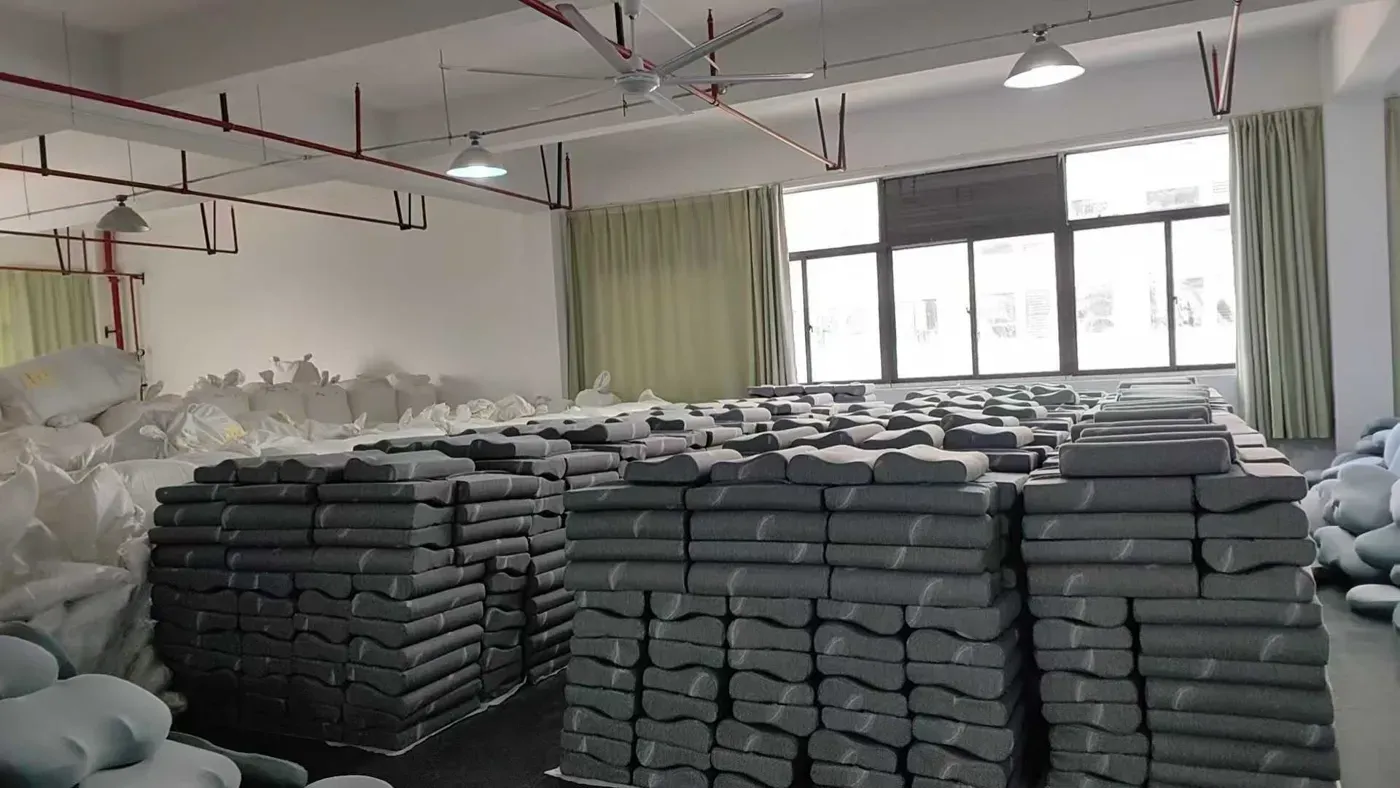
A hotel inquiry recently packed four questions into one line: "Packing: vacuum compressed or not; maximum safe compressed time; expected new-foam odour duration and hotel-use suitability." Read them together and the buyer is really asking one thing — will the pillow that arrives at room 1412 be the pillow I sampled?
Vacuum compression, and the time limit that matters
Vacuum compression is standard for pillow freight: rolling or compressing the pillow and sealing it in film cuts shipping volume dramatically, and ocean transit plus warehousing can add months between packing and use. The honest industry position on safe compressed storage is a range, not a promise. A well-made viscoelastic core recovers within twenty-four to seventy-two hours of unpacking after normal transit. Stored compressed, quality foam tolerates months — but compression set risk grows with time and temperature, and the recovery test is the only way to know where your product's real limit sits.
The defensible answer to "maximum safe compressed time" is therefore a stated figure backed by a test: pack production pillows, store them compressed at warehouse temperature, unpack at intervals — one month, three months, six — and measure recovery and dimensions against the fresh sample. State the tested limit, not a hopeful one. Suppliers who quote "up to one year" without a test are answering a question the buyer will eventually answer for them, in a warehouse, with their product.
Odour duration, answered with a process
Fresh polyurethane foam carries a characteristic new-foam smell that decays as residual volatiles dissipate. In practice it fades over days to a couple of weeks in ventilated space. The hotel-relevant questions are whether the pillow can be aired before guest use and whether the smell signals anything worse. Processes that reduce it are unglamorous and real: curing time before packing, ventilation between production and vacuum sealing, and activated carbon sachets in the polybag for hotel programs. An off-gassing test report from a third-party lab turns the reassurance into a document — and hotel groups increasingly ask for one.
Hotel suitability is a durability question
"Hotel-use suitability" in buyer language means laundering cycles and rebound after a year of commercial use. The answer comes from the cover spec (tested wash cycles, as covered in any serious cover specification) and a rebound check on the core after accelerated use — compress-and-release cycles, or a used-sample comparison. A supplier who has run these checks can answer the whole four-part packing question in one paragraph with evidence. A supplier who has not will discover, mid-tender, that the questions were one question.


