Custom Firmness Zones: Dual-Layer and Zoned Memory Foam Pillow Construction
How dual-layer and zoned memory foam pillow construction works: support vs comfort foam, ILD zoning, neck support, and what B2B buyers should specify on a custom build.
Introduction
A memory foam pillow is rarely one block of one foam. The pillows that hold their comfort and support over years of use are built in layers and zones, with each region engineered for a different job. For B2B buyers specifying a custom build, understanding dual-layer and zoned construction is the difference between a pillow that feels premium on day one and one that still feels right after ten thousand nights. This guide explains how the layers and zones actually work and what to put in a specification sheet.
The Two Jobs: Support and Comfort
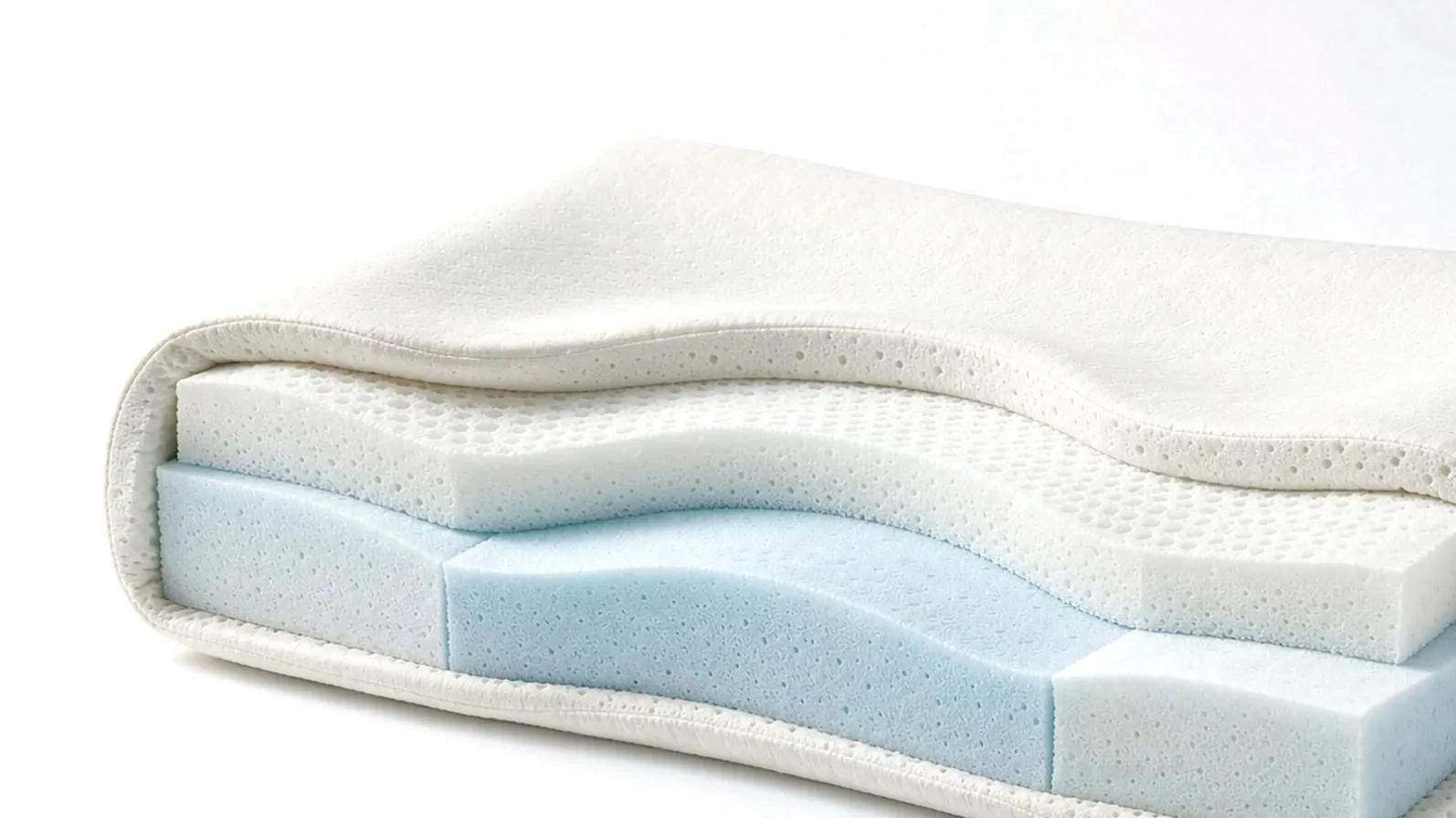
Every pillow has to do two conflicting things at once. It must hold the head and neck in alignment (support), and it must feel soft and pressure-relieving at first contact (comfort). A single uniform foam grade cannot do both well, which is why dual-layer construction splits the work.
- The support core is a higher-density, higher-ILD foam that resists bottoming out and keeps the cervical contour stable.
- The comfort layer is a lower-ILD foam on top that cradles the skull and relieves pressure points.
- Together they let a buyer specify "firm support, soft feel" without contradiction.
The density and ILD split between the two layers is the core of the build, and it should be written into the order, not left to the factory's default.
What ILD Zoning Actually Does
/posts/how-memory-foam-pillows-are-made (ILD) is the number that defines firmness: the force needed to compress the foam 25%. Zoning means using different ILD values in different regions of the same pillow. A common pattern puts a firmer ILD under the neck roll and a softer ILD under the head, so the cervical curve is supported while the skull sinks just enough to relieve pressure.
When you review a memory foam pillow density and ILD spec, ask for the ILD of each zone separately, not an average. An averaged number hides a neck roll that is too soft to do its job.
Contour and Zone Must Agree
A zoned pillow only works if the geometry and the foam agree. The ergonomic cervical contour — the raised neck roll and the cradle for the head — has to be cut into a foam grade that actually holds that shape under load. If the neck zone is too low-ILD, the contour flattens overnight and the alignment benefit disappears.
This is why the ergonomic cervical pillow guide and the construction spec belong together: the shape is the promise, and the zoned ILD is what keeps the promise under a real head.
Loft, Zone, and Sleeper Segment
Loft — the pillow's height — is set by the total foam stack, and it interacts with zoning. A side sleeper needs more loft and a firmer neck zone than a back sleeper. A good custom program offers two or three loft-and-zone combinations rather than one "universal" pillow that fits no one perfectly.
Specify loft band per target segment, because the same foam zone that feels supportive at 10 cm loft can feel like a brick at 14 cm. The memory foam pillow size and loft spec should be decided together with the zone map.
How the Layers Are Made
Understanding the build process helps buyers audit it. In a typical dual-layer pillow:
- The support core is cut or molded to the contour first.
- The comfort layer is laminated or molded on top with a compatible adhesive.
- The combined block is then covered, usually with a removable, washable knit or a cooling-fabric shell.
Adhesive compatibility matters: a mismatch can cause delamination after compression and transit. Ask whether the lamination is heat-bonded or glued, and request the same method on the sealed sample and the production run.
Sampling the Zones
Because zoning is invisible from the outside, it has to be verified by sampling. A golden sample should record the ILD of each zone, the layer thicknesses, and the loft. The production lot should be checked against that sealed sample, not against a generic photo.
This is where the making process and the quality gate meet: a pillow can look identical on the line and still have the wrong zone ILD. The inspection step exists precisely because the zone is hidden inside.
Common Construction Defects
Knowing what goes wrong helps you write the spec that prevents it.
- Neck zone too soft — the contour flattens and support is lost; check the ILD, not the average.
- Inconsistent zone boundaries — sloppy lamination shifts the firm region away from the neck.
- Loft drift between lots — the same spec produces different heights because layer thickness is not controlled.
Conclusion & Next Step
Dual-layer and zoned construction is what turns a block of foam into a pillow that supports and comforts at the same time. Specify the ILD of each zone, the layer thicknesses, and the loft band per sleeper segment, then lock them with a sealed sample and lot-release checks. Buyers who spec the zones explicitly get a consistent product; buyers who leave it to default get a coin toss.
Talk to our sourcing team on WhatsApp +86 137 7374 7840 for a zoned-construction specification sheet, sample ILD data, and MOQ tailored to your market.


