Compression Set and Sagging: Why Cheap Memory Foam Pillows Fail
What compression set means for memory foam pillows, why cheap foam sags within months, and the density, ILD, and QC checks that keep a B2B pillow program from failing.
Introduction
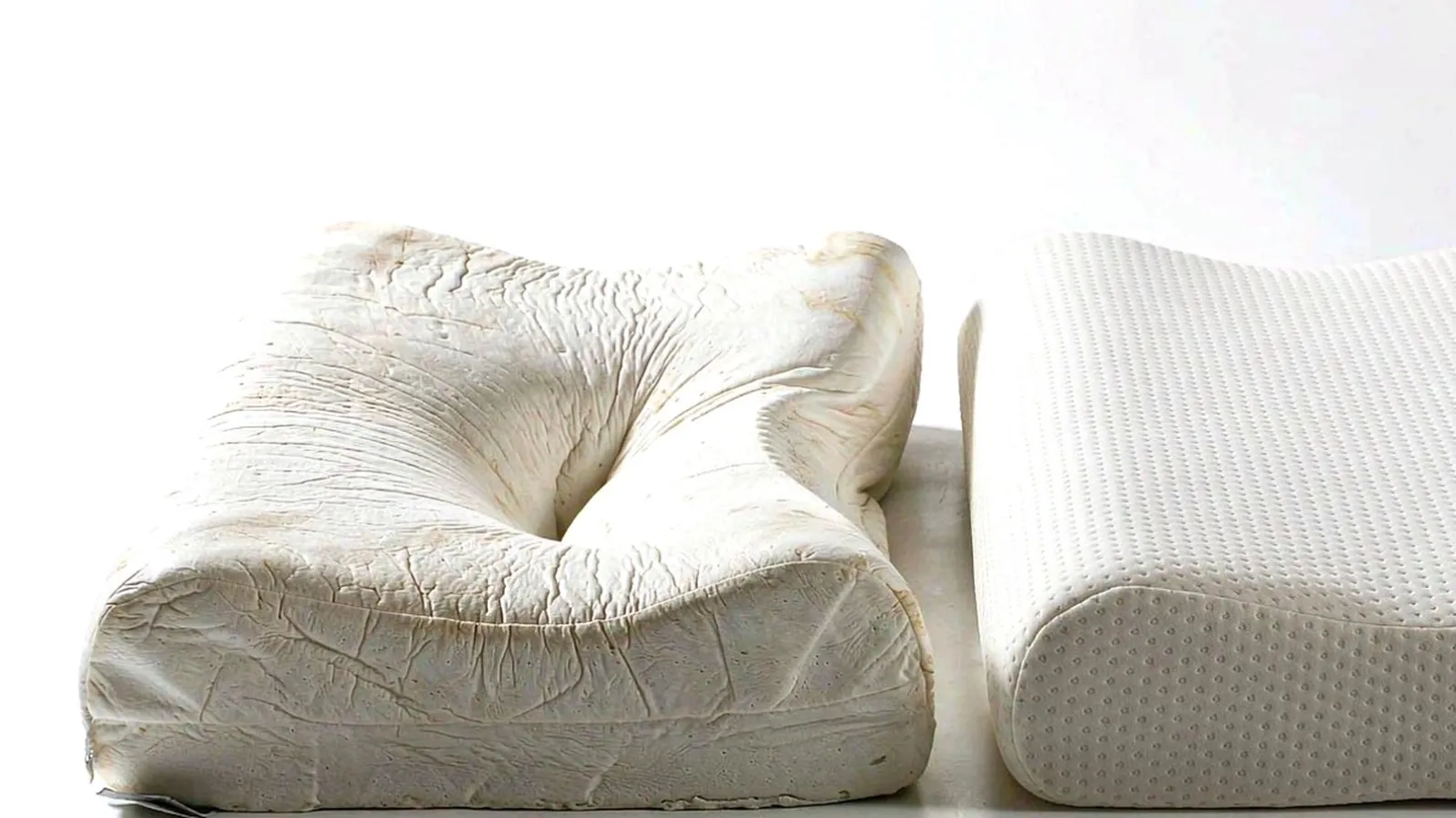
Compression set is the quiet killer of memory foam pillow programs. A pillow can look perfect in the showroom, pass a casual squeeze test, and still be structurally failing — because compression set is measured in a lab, not by hand. For B2B buyers, understanding this one property explains most sagging complaints, most warranty claims, and most of the price gap between a pillow that lasts three years and one that flattens in six months.
What Compression Set Actually Measures
Compression set is the permanent thickness loss after foam is held under constant compression for a fixed time and temperature, tested per ASTM D3574 or ISO 2440. A foam with high compression set does not spring back; it takes a "set" — a flattened shape it never fully recovers from.
- Low compression set (good): the foam recovers most of its thickness after repeated load cycles.
- High compression set (bad): each night of use permanently flattens the pillow a little more.
- The failure shows up months later as a pillow that no longer supports the neck, long after the sale and long after the return window the buyer expected.
Why Cheap Foam Sags Fast
The sag problem traces mostly to density and ILD shortcuts. Density (kg/m³) is the amount of material in the foam; ILD is its firmness. Cheap pillows cut density to cut cost, and low-density foam has less structure to resist permanent deformation.
- Low-density foam collapses under repeated load — the cells rupture instead of recovering.
- A wrong /posts/how-memory-foam-pillows-are-made value makes it worse: foam that is too soft for its thickness bottoms out and stays bottomed.
- Poor curing during production leaves residual chemistry that keeps degrading the foam after it ships.
This is why the density and ILD spec matters more than the thread count of the cover. The foam is the product.
How It Shows Up in the Field
Buyers see compression set failures as predictable symptom patterns.
- A visible head dent that does not recover by morning.
- Loft loss that no amount of fluffling restores — the foam has taken a set.
- Neck pain complaints rising in reviews months after purchase.
- A cluster of warranty claims arriving together, because a whole production lot shared the same weak foam.
That last symptom is the expensive one: if a lot is bad, every unit in it fails on the same timeline, which turns a product issue into a brand issue.
The Lab Numbers to Demand
Protection is straightforward: test, don't trust.
- Ask for compression set as a percentage (commonly required under 5% per ASTM D3574 Method B for quality foam).
- Ask for the foam density in kg/m³ and the ILD rating of the actual production grade, not a generic datasheet.
- For dual-layer builds, get the numbers per layer and per zone, since one weak layer dooms the whole pillow.
These numbers belong in the sample approval record, so the production lot is verifiably the foam you tested.
Lock It With Quality Control
Lab data on a sample is worthless if the production lot differs. The fix is procedural, and it is the same discipline behind any serious pillow quality control plan.
- Seal a golden sample with its density, ILD, and compression-set data recorded.
- Apply lot-release checks against that sample on every production run.
- Require a /posts/how-to-choose-memory-foam-pillow-supplier with an agreed AQL so a weak lot is caught before it loads.
A supplier who resists lot-release testing is telling you where the risk lives.
Compression Set and the Warranty Bill
Compression set failures do not stay technical for long — they become commercial. A pillow that sags inside its expected life generates warranty claims, chargebacks, and review damage that costs more than the price difference of decent foam ever would.
Buyers who write compression-set limits into the purchase agreement have a clean basis for a warranty claim when a lot fails. Buyers who did not spec it are negotiating from zero. The memory foam pillow warranty terms you can enforce are the ones you wrote before the container shipped.
The Manufacturing Link
Compression set is largely determined upstream in formulation and curing — it is a manufacturing property, not an assembly accident. Buyers who understand how memory foam pillows are made can ask better questions: foam grade origin, curing time and temperature, and whether the plant runs consistent batches or blends remnant foam.
A factory that cannot answer those questions cleanly is a factory whose "same foam" will not be the same foam next month.
Red Flags When Sourcing
Most sag risk is visible in the first conversation.
- Density and ILD given as adjectives instead of numbers.
- No compression-set test report, or one without a test method named.
- A sample that feels great but comes with no spec sheet to hold production to.
- Warranty terms that exclude "normal wear" without defining it.
Conclusion & Next Step
Compression set is why cheap memory foam pillows fail: low-density, poorly cured foam takes a permanent set and the pillow flattens within months. Demand the lab numbers, lock them with a sealed sample and lot-release inspection, and write enforceable warranty terms before the order. Buyers who spec compression set explicitly import pillows that keep their loft — and keep their customers.
Talk to our sourcing team on WhatsApp +86 137 7374 7840 for compression-set test reports, density and ILD documentation, and MOQ tailored to your market.


