Showroom and Display Merchandising: How Wholesalers Present Memory Foam Pillows
A merchandising playbook for wholesalers selling memory foam pillows: tactile trial, visual display, comparison staging, sample management, and the content assets that close B2B orders.
Introduction
Memory foam pillows are a feel-first product. Buyers will not commit a container on a spec sheet alone; they want to touch the cover, press the foam, and judge the loft. For wholesalers and distributors, the showroom and the display are where the order is won. This playbook covers how to stage memory foam pillows so a B2B buyer leaves convinced, and how to arm the sales team with the content assets that close the deal after the visit.
Lead With Touch, Not Talk
The single most effective merchandising move is to let the buyer feel the product. A pillow behind glass or shrink-wrap sells on faith; a pillow on an open display sells on experience.
- Stage a "try it" bed or lounge corner with two or three loft-and-firmness options.
- Keep a cutaway sample showing the foam layers and the cover construction — wholesalers who show the inside build more trust than those who hide it.
- Put the antimicrobial, washable cover story in the buyer's hand as a swatch, not just a sentence.
Stage the Comparison
Buyers almost always weigh memory foam against down alternative or latex, so stage that comparison openly rather than fearing it.
- Place a memory foam, a down-alternative, and a latex sample side by side with the same cover treatment.
- Let the buyer press all three; the foam's support and the hypoallergenic, sealed-cover advantage make the case without a hard sell.
- Keep the comparison honest — a confident wholesaler shows the trade-offs and still wins the foam order for the right segment.
Visual Display and Lighting
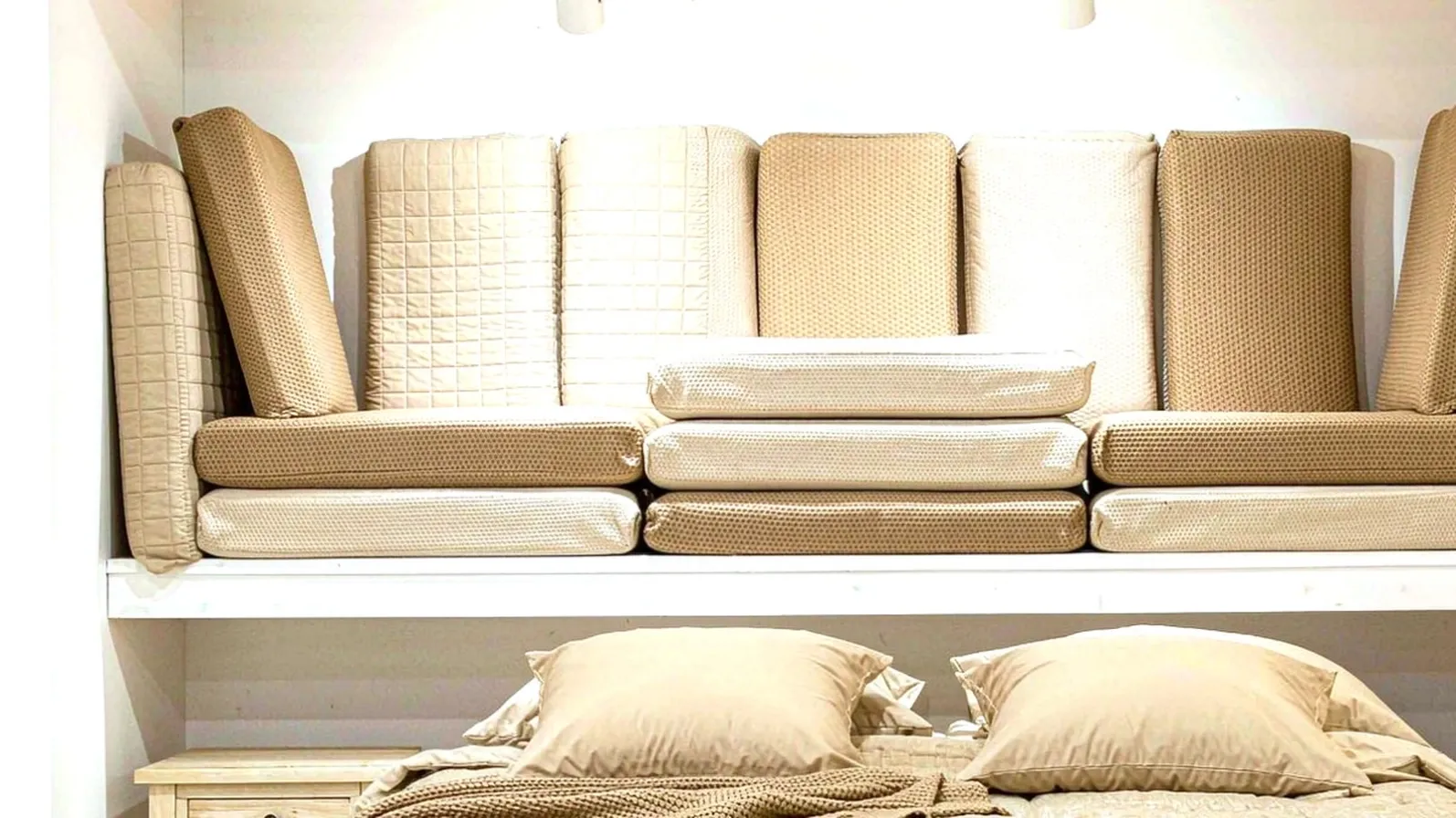
Foam is white and quietly premium, which means poor lighting makes it look like a hospital supply. Invest in warm, even light and clean backdrops so the product reads as hospitality-grade, not commodity.
- Use neutral props and a made-bed context so buyers picture the pillow in a room.
- Keep packaging visible but tidy; the carton is part of the brand the buyer will receive.
- A private-label program should show both plain and branded options so the buyer sees their own potential shelf.
Manage Samples Like Inventory
In a pillow showroom, samples are working stock, not decor, and they degrade with handling. A worn, yellowed sample quietly sells against you.
- Rotate display units on a schedule and retire any that look tired.
- Track which SKUs get handled most and keep those refreshed — they are your best closers.
Content Assets That Close the Order
The visit ends, but the decision happens later at the buyer's desk. The content assets you hand over decide the follow-through. Product photography and lifestyle imagery that show the pillow in context do more than a price sheet.
- Provide a photo pack per SKU: white-background, in-context, and detail shots of the cover and layers.
- Include a one-page spec with ILD, loft, and wash durability, not just dimensions.
- Offer co-branded or plain assets so the buyer can drop them into their own catalog.
Train the Pitch to the Segment
Different buyers want different proof. A hotel procurement lead cares about wash cycles and lot consistency; a retailer cares about shelf appeal and margin; a contract buyer cares about total cost over three years. Merchandise the conversation to the segment standing in front of you.
A deliberate channel strategy means the same showroom serves all three because the assets and the staged comparisons map to each buyer's real question.
Digital Mirror of the Showroom
The physical showroom should have a digital twin: a clean product page, a downloadable spec sheet, and a video of the try-it corner. Buyers who cannot visit still need the same tactile story told through footage and clear imagery.
This is where the content-asset discipline pays off twice — it closes the room visit and substitutes for it when travel is not possible.
Red Flags in a Pillow Display
Weak merchandising repeats the same mistakes.
- Pillows locked away or wrapped so the buyer cannot feel them.
- No cutaway or layer sample, hiding the very thing that justifies the price.
- Tired, handled samples left on display past their prime.
- A spec sheet with only dimensions and no ILD, loft, or wash data.
Conclusion & Next Step
For wholesalers, the memory foam pillow sells in the showroom and closes with the assets that follow the buyer out the door. Let them touch it, stage the comparison honestly, light it like a premium product, and refresh the samples on a schedule. Pair the visit with a sharp content-asset pack — photography, spec sheet, and segment-tuned pitch — and the order writes itself. Distributors who merchandise this way convert showroom traffic into standing orders.
Talk to our sourcing team on WhatsApp +86 137 7374 7840 for a wholesale display kit, sample program, and content-asset package tailored to your buyer segments.


